
|
Media centre
| |
|
News |
Last updated: 03 March 2010
|
| |
Africa Environment Day: Building resilience to climate change and protecting biodiversity
(posted on 03 March)
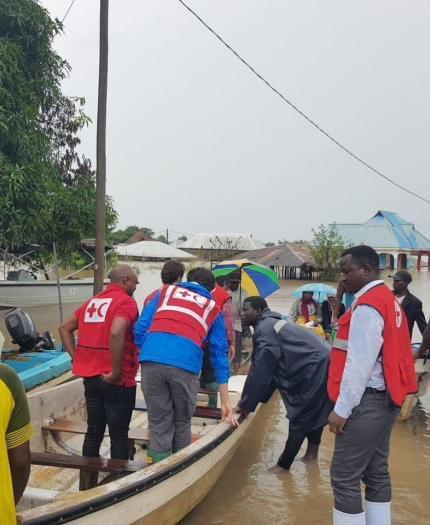
The Secretary-General of WMO, Michel Jarraud, joined the celebrations to mark the Africa Environment Day on 3 March 2010 in Arusha, Tanzania. This year’s theme focuses on building African resilience to climate change and protecting Africa's unique biodiversity in the face of the mounting impacts of climate variability and change.
In his statement, Mr Jarraud expressed WMO’s firm commitment to support Africa’s efforts. “While natural hazards cannot be avoided, capacity building can prepare societies to significantly reduce death and destruction,” he noted. Giving an update on the Global Framework for Climate Services, he said that for Africa it would contribute to meet vital challenges in the areas of disaster prevention, food security and water management in a way fully compatible with the protection of the environment.
Statement
|
High-level Taskforce begins work on Global Framework for Climate Services
(posted on 26 February)
A High-level Taskforce of independent advisers, mandated by World Climate Conference-3 (WCC-3) to elaborate the Global Framework for Climate Services, held its first meeting at WMO (25-26 February 2010). Jan Egeland of Norway and Mahmoud Abu-Zeid of Egypt will serve as Co-chairs of the expert group that is to submit its final report by February 2011. Among its other members are: Joaquim Chissano (Mozambique), Ricardo Lagos (Chile), Angus Friday (Grenada), Eugenia Kalnay (Argentina/USA), Julia Marton-Lefevre (Hungary/France/USA), Khotso Mokhele (South Africa), Chiaki Mukai (Japan), Cristina Narbona Ruiz (Spain), Rajendra Singh Paroda (India), Qin Dahe (China), Emil Salim (Indonesia) and Fiame Naomi Mata’afa (Samoa). Read more
|
Addressing social needs in adapting to climate risks
(posted on 25 February)
The World Climate Research Programme (WCRP) and the WMO Commission for Climatology (CCl) have adopted a plan to use climate information for emerging social needs relating to adaptation and risk management. At their meeting in Antalya, Turkey (15-19 February 2010), they agreed on a statement that elaborates the implementation plan. The issues being addressed are in line with establishing the Global Framework for Climate Services, decided at World Climate Conference-3. WCRP and CCI have also agreed to establish a joint collaborative mechanism and will seek further partnership with other WMO bodies. |
Predicting winter weather for the Vancouver 2010 Olympic and Paralympic Games
(posted on 24 February)
An international team of scientists from nine countries assembled by WMO and Environment Canada is conducting a weather research and development project called the Science and Nowcasting of Olympic Weather for Vancouver 2010 (SNOW-V10). Prediction of winter weather in the mountains is always a challenge for meteorologists, as conditions can change rapidly with time and with altitude. The Vancouver 2010 Winter Olympic and Paralympic Games are especially demanding with some events requiring minute-by-minute monitoring and prediction of a wide variety of weather variables. Nowcasting enables forecasting weather conditions up to six hours in advance.
Read more
|
Impacts of climate change on tropical cyclones
(posted on 24 February)
If twenty-first century warming occurs as projected, the maximum wind speed of tropical cyclones will likely, on average worldwide, increase 2 to 11 per cent, while rainfall rates will increase approximately 20 per cent within 100 kilometres of a storm centre, according to the WMO Expert Team on Climate Change Impacts on Tropical Cyclones. Publishing the projections in Nature Geoscience in March 2010, the experts concluded that the total number of tropical cyclones worldwide will likely either decrease or remain unchanged. However, a likely increase in tropical cyclone intensity means that the frequency of the strongest tropical cyclones will more likely than not increase under the projected warming scenarios.
Read more
|
Commission for Climatology elects new officers
(posted on 22 February)
From 19 to 24 February 2010, some 150 experts from around the world are participating in the Fifteenth Session of the Commission for Climatology of WMO in Antalya, Turkey. The Commission for Climatology has unanimously elected Thomas Peterson, Chief Scientist at the National Climatic Data Center/NOAA (USA), and Serhat Sensoy, Chief of the Climatology Division at the Turkish State Meteorological Service, as its President and Vice-President, respectively, for the next four years.
Read more
|
Tropical cyclone Rene in South Pacific
(posted on 15 February)
Tropical cyclone Rene has developed in the South Pacific and is located over the island Tongatapu, Tonga, as of 6:00 UTC today. It is forecast to move south-west at 19 kilometres per hour. It is currently equivalent to a Category 3 hurricane and is expected to remain at this intensity during the next 12 hours, and then weaken slowly within 48 hours. Rene could severely damage the islands of Tonga. The sea state in the surrounding area will be extremely rough at least in the next 48 hours. Ships passing by these areas are advised to take urgent measures to avoid risks.
Further information is available at:
National Meteorological Service of the countries concerned
WMO RSMC Nadi-Tropical Cyclone Centre
WMO Severe Weather Information Centre
Q&A on tropical cyclones
|
Climate scientists to meet to discuss applied research
(posted on 11 February)
From 15 to 19 February 2010, the World Climate Research Programme (WCRP) will hold a Joint Scientific Committee meeting in Antalya, Turkey. A key topic of discussion will be the role of WCRP research in the Global Framework for Climate Services, including how to develop the next generation of applied climate research. During the meeting, the WMO Commission for Climatology is organizing a Technical Conference on Changing Climate and Demands for Climate Services for Sustainable Development from 16 to 18 February.
|
Preparing for the rainy and hurricane seasons in Haiti
(posted on 9 February)
Operational meteorological services are essential to preventing further disasters in Haiti. The country now faces the approaching rainy season in early April, which poses flood risk, as well as the hurricane season beginning in early June. Weather forecasts and early warnings from the Haiti National Meteorological Center are essential for emergency contingency planning and recovery. WMO Members have been providing weather information for Haiti since domestic meteorological facilities were rendered unusable by the recent earthquake. In the medium- to long-term, WMO is coordinating with government officials, technical agencies and development partners to reconstruct such meteorological and hydrological capacities.
More information
|
Rapid climate change in the Arctic
(posted on 9 February)
Climate change is accelerating the disappearance of sea ice in the Arctic, according to early findings of a large-scale study that is part of the International Polar Year (IPY), a project organized by WMO and the International Council for Science. The study was the largest yet of the Canadian Arctic, involving more than 370 scientists from 27 countries researching aboard a vessel above the Arctic Circle. More information
IPY Website
International Polar Year Oslo Science Conference, 8–12 June 2010
|
Tropical cyclone Oli in South Pacific
(posted on 4 February)
Tropical cyclone Oli developed at 06:00 UTC today in the South Pacific, about 350 kilometers west of Tahiti, French Polynesia. Oli is moving south-east at 15 kilometres per hour. It is currently equivalent to a Category 3 hurricane (maximum sustained wind speeds of 178 to 209 kilometres per hour). It is expected to intensify further within the next 12 hours, and weaken slowly afterwards. The sea state in the surrounding area will be extremely rough at least in the next 48 hours. Ships passing by these areas are advised to take urgent measures to avoid risks.
Further information is available at:
National Meteorological Service of the countries concerned
WMO RSMC Nadi-Tropical Cyclone Centre
Q&A on tropical cyclones
|
WMO Commission to enhance meteorological services for aviation
(posted on 3 February)
Three-quarters of significant air traffic delays in regions with high-traffic density are related to weather, and nearly half of aircraft accidents occur during operations in adverse weather. From 3 to 10 February 2010, some 150 representatives from National Meteorological and Hydrological Services, including aeronautical meteorologists and representatives from aviation organizations, will meet in Hong Kong, China, to discuss planning and operations for air transport based on global standards and accurate weather forecasts and warning.
More information
|
WMO and international consortium to collaborate on geospatial standards
(posted on 28 January)
WMO recently signed a memorandum of understanding with the Open Geospatial Consortium, Inc., to enhance the development and use of geospatial standards. It is anticipated that this collaboration will support the implementation of the WMO Information System, which aims at providing a single coordinated global infrastructure for the collection and sharing of information in support of all WMO and related international programmes.
More information
|
WMO meets with space agencies on climate matters
(posted on 22 January)
The tenth session of the Consultative Meeting on High-level Policy on Satellite Matters (CM-10) will be held at WMO headquarters from 28-29 January 2010. The annual meeting, chaired by WMO President Alexander I. Bedritsky, brings together senior officials from space and meteorological agencies around the world. This year, the focus of the meeting will be on improved international collaboration among major space agencies for a coordinated and sustained monitoring of Earth's climate. Senior officials from Brazil, Canada, China, the Cook Islands, France, Germany, Guinea, India, Japan, Korea, the Russian Federation, Trinidad and Tobago, and the United States of America will join the meeting.
|
New world record wind gust
(posted on 22 January)
According to a recent review and evaluation conducted by a panel of experts in charge of global weather and climate extremes within the WMO Commission for Climatology (CCl), the new record wind gust, not related to tornados, registered to date is 408 kilometres per hour. This record occurred during Tropical Cyclone Olivia on 10 April 1996 on Barrow Island, Australia. The previous record was of 372 kilometres per hour, registered in April 1934 across the summit of Mount Washington, New Hampshire (USA).
More information
Fact sheet on tropical cyclones
|
Global Cryosphere Watch
(posted on 22 January)
The international community is working within WMO towards the establishment of a Global Cryosphere Watch (GCW) to serve societal needs for weather, climate and water and related environmental information and services. At its next quadrennial session in 2011, the World Meteorological Congress – the WMO supreme governing body – is to consider how to develop and implement a GCW.
More information
|
US National Weather Service assists Haiti
(posted on 15 January)
The Miami Office of the United States National Weather Service has created a weather support page to provide weather conditions and forecasts for Haiti and the surrounding Caribbean in the wake of the recent earthquake. According to the WMO Office for North America, Central America and the Caribbean, based in Costa Rica, meteorological operations in the Port-au-Prince International Airport by the national meteorological services are reported to be down. The airport is closed for commercial flights and the US Army is provisionally preparing the METAR and TAF messages for humanitarian flights. METAR and TAF are concise textual formats used for transmitting weather reports and forecasts for aviation purposes. This meteorological information is essential for flight safety.
More information
|
IMO Prize awarded to Eugenia Kalnay
(posted on 14 January)
On 14 January 2010, WMO awarded the fifty-fourth International Meteorological Organization (IMO) Prize to Eugenia Kalnay (Argentina/United States of America), a leader in the field of global numerical weather prediction and analysis, including data assimilation and ensemble forecasting. The IMO Prize is the highest distinction of WMO. The award ceremony took place at the National Academy of Science in Washington, D.C. (USA), with the participation of Michel Jarraud, WMO Secretary-General, Alexander Bedritsky, WMO President, and John L. Hayes, NOAA Deputy Assistant Administrator and Permanent Representative of the United States with WMO.
Read more
Press release no. 851
|
Cold wave in the northern hemisphere
(posted on 14 January)
The cold wave now affecting the northern hemisphere is a meteorological phenomenon caused by the large-scale blocking of atmospheric circulation on a major North-South corridor. The phenomenon is well known by meteorologists and is generally linked with atmospheric oscillations, such as the Arctic oscillation, which has been relatively powerful since mid-December 2009. The blocking episode is nearing its end, and the northern hemisphere winter is now reverting to its normal features from the West and South in Western Europe. Some severe episodes will no doubt linger in several regions of the world and during certain periods of the winter season, which is quite normal.
For more detailed information on the situation in any specific country, please contact the corresponding National Meteorological and Hydrological Service.
|
Launching the Global Framework for Climate Services
(posted on 14 January)
Representatives from more than 100 countries, as well as from non-governmental and intergovernmental organizations, met in Geneva, Switzerland, from 11 to 12 January 2010 to follow-up on the decision by World Climate Conference-3 (WCC-3) to establish a Global Framework for Climate Services (GFCS) to strengthen the production, availability, delivery and application of science-based climate prediction and services. As mandated by WCC-3, the intergovernmental meeting, chaired by WMO President Alexander I. Bedritsky, approved the terms of reference and endorsed the composition of a High-Level Taskforce of independent advisers, which the Secretary-General of the WMO has been requested to set up. The Taskforce will follow up with recommendations for proposed elements of the GFCS, as well as for next steps to develop and implement the GFCS. Its report will be published before the next quadrennial World Meteorological Congress in May 2011.
The text with the terms of reference will be posted on the WMO Website as soon as it is available in the six UN official languages. The composition of the taskforce will be made public once its members have notified their acceptance.
|
Intergovernmental meeting on the GFCS high-level taskforce
(posted on 8 January)
From 11 to 12 January 2010, the Intergovernmental Meeting for the High-Level Taskforce on the Global Framework for Climate Services (GFCS) will take place at the Geneva International Conference Centre (CICG) in Switzerland. The meeting is convened in accordance with the Declaration adopted by World Climate Conference-3 (31 August to 4 September 2009). Its purpose is to approve the terms of reference and endorse the composition of a high-level taskforce of independent advisors, on the basis of proposals made by the WMO Secretary-General. This taskforce will follow up with recommendations for the development of the GFC.
|
|
|

 |
|
|
|